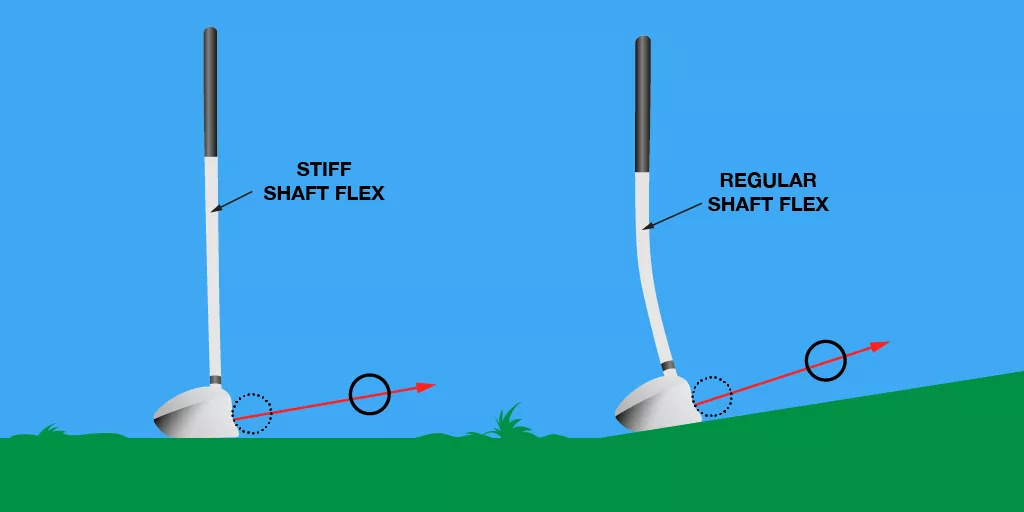
Shaft flex affects distance, accuracy, and consistency, but most golfers don't give it enough thought. Stiff and regular flex are the two most common options for weekend players. The right choice depends on your swing speed, tempo, and skill level. Here's how to figure out which one fits your game.
Key Takeaways
- Stiff vs. regular flex depends on swing speed and skill level
- Custom fitting ensures optimal shaft flex selection
- Debunk shaft flex myths for informed decision-making
Overview of Stiff and Regular Flex Irons
Golf irons come in various flex options, but stiff and regular are the two most common for weekend golfers. Each caters to different swing speeds and skill levels.
Importance of choosing the right flex for your game
The right flex improves distance, accuracy, and consistency. The wrong flex costs you strokes.
Stiff Flex Irons
Characteristics of stiff flex irons
Stiff flex irons are designed for golfers with faster swing speeds, generally in the range of 90 to 110 miles per hour. These irons feature a stiffer shaft, which provides greater resistance to bending and twisting during the swing, promoting a more stable and consistent ball flight.
Benefits of stiff flex irons
- Increased control and accuracy: The stiffer shaft of stiff flex irons can give golfers greater control over their shots, leading to improved accuracy and shot-making capabilities.
- Enhanced consistency: Due to their resistance to twisting, stiff flex irons can promote a more consistent and stable ball flight, resulting in more predictable shot outcomes.
- Better suited for faster swing speeds: Golfers with speedier swing speeds can benefit from stiff flex irons, as the stiffer shaft helps to optimize energy transfer during the swing, maximizing distance and control.
Drawbacks of stiff flex irons
- Less forgiving for slower swing speeds: Golfers with slower swing speeds may struggle to generate optimal distance and launch angle with stiff flex irons, leading to less desirable shot outcomes.
- Potentially less comfortable: The stiffness of stiff flex irons can lead to increased vibrations during the swing, which some golfers may find less comfortable than the smoother feel of regular flex irons.
- Less suited for finesse shots: Golfers who prefer to shape their shots and rely on finesse may find stiff flex irons less accommodating for their preferred style of play.
Regular Flex Irons
Characteristics of regular flex irons
Regular flex irons are designed for golfers with moderate swing speeds, typically 75 to 90 miles per hour. These irons feature a more flexible shaft, allowing for greater bend and energy transfer during the swing, which can result in higher launch angles and increased distance for players with slower swing speeds.
Benefits of regular flex irons
- Improved distance for moderate swing speeds: The increased flexibility of regular flex irons can help golfers with average swing speeds generate greater distance by promoting a higher launch angle and better energy transfer during the swing.
- Enhanced feel and comfort: Regular flex irons tend to provide a smoother feel during the swing due to their increased flexibility, making them more comfortable and enjoyable to play with for some golfers.
- Better suited for finesse shots: Golfers who prefer to shape their shots and rely on finesse may find regular flex irons more accommodating for their preferred style of play, as the increased flexibility allows for greater shot-shaping capabilities.
Drawbacks of regular flex irons
- Reduced control and accuracy for faster swing speeds: Golfers with faster swing speeds may struggle to control their shots as effectively with regular flex irons due to the increased shaft flexibility, which can lead to less predictable shot outcomes.
- Less consistency for faster swing speeds: The increased shaft flexibility of regular flex irons can result in less consistent ball flight for golfers with faster swing speeds, as the shaft may be more prone to twisting during the swing.
Factors to Consider When Choosing Flex
Swing speed
Swing speed is critical when determining the ideal flex for your irons. Golfers with faster swing speeds typically benefit from stiffer shafts, while those with moderate swing speeds often perform better with regular flex irons.
Tempo
Your swing tempo can also impact your choice of shaft flex. Golfers with a smoother, more rhythmic swing may benefit from a more flexible shaft, while those with a quicker, more aggressive swing may find a stiffer shaft more appropriate.
Shot shape and trajectory preferences
Consider your preferred shot shape and trajectory when selecting a shaft flex. Golfers who prefer a higher ball flight and greater shot-shaping capabilities may find regular flex irons more suitable. In contrast, those prioritizing control and accuracy may choose stiff flex irons.
Skill level and handicap
Your skill level and handicap can also influence your choice of shaft flex. Lower handicap golfers often benefit from the increased control and consistency of stiffer shafts. In contrast, higher handicap players may find the improved distance and feel of regular flex irons more beneficial for their game.
| Feature | Stiff Flex Irons | Regular Flex Irons |
|---|---|---|
| Swing Speed | Faster (typically >90 mph) | Moderate (typically 75-90 mph) |
| Tempo | Quicker, more aggressive | Smoother, more rhythmic |
| Feel | Firmer | Softer |
| Control & Accuracy | Better for faster swing speeds | Better for moderate swing speeds |
| Consistency | Better for faster swing speeds | Less consistent for faster swing speeds |
| Shot Shape & Trajectory | Lower ball flight, more control | Higher ball flight, greater shot shaping |
| Recommended for Handicap | Lower handicap players | Higher handicap players |
Myths and Misconceptions about Shaft Flex
Debunking common misconceptions
- Stiffer shafts always mean longer shots: While stiffer shafts can provide more control, distance gains are not guaranteed and depend on the individual golfer's swing characteristics.
- Regular flex is for beginners: Regular flex shafts can suit golfers of various skill levels as long as it aligns with their swing speed and tempo.
- Higher swing speed always requires a stiffer flex: Factors like tempo, transition, and personal feel also play a role in determining the right flex.
Addressing common mistakes when choosing a shaft flex
- Ignoring swing tempo: Even with a fast swing speed, a golfer with a smooth tempo might benefit from a more flexible shaft.
- Focusing on brand instead of performance: Golfers should prioritize finding the right flex based on their swing characteristics rather than choosing based on brand popularity.
Other Flex Options
- Senior flex: Designed for golfers with slower swing speeds, typically over 50, senior flex shafts provide more flexibility for easier launch and increased distance.
- Extra-stiff flex: Extra-stiff flex shafts are ideal for golfers with very fast swing speeds, providing enhanced control and stability for more consistent shots.
- Ladies' flex: Ladies' flex shafts cater to golfers with slower swing speeds and lighter clubhead weights, offering increased flexibility for improved launch and distance.
Technological Advancements in Shaft Flex Manufacturing
Evolution of shaft flex technology
Shaft flex technology has improved steadily. Manufacturers can now fine-tune flex profiles for better energy transfer, tighter consistency, and more predictable shots.
Future developments in shaft flex
As technology continues to evolve, we can expect further advancements in shaft flex manufacturing. This may lead to even more precise flex profiles and improved materials that cater to the specific needs of individual golfers.
Tips for Self-Assessment
Guidelines for evaluating your swing characteristics
Before seeing a fitter, get a rough sense of your swing speed, tempo, shot shape, and skill level. That context helps you have a productive fitting session.
When to see a fitter
Self-assessment is a starting point, not a finish line. A professional fitter has launch monitors and expertise to dial in the exact flex for your swing. Once you know the basics about your game, book a fitting to confirm the right choice.
The Importance of Custom Fitting
A well-fitted set of irons with the right shaft flex improves consistency, accuracy, and performance. A fitter analyzes your swing speed, tempo, and shot shape with launch monitors, then recommends the flex that matches your game. It's one of the best investments you can make in your equipment.
Wrapping Up
Swing speed is the biggest factor: above 90 mph usually means stiff, below that usually means regular. But tempo and feel matter too, so get fitted to confirm. A custom fitting takes the guesswork out and puts the right flex in your hands.
Frequently Asked Questions
Quick answers about stiff vs. regular flex irons.